
How Historic Design Creates Atmosphere
at the Irish Whiskey Museum
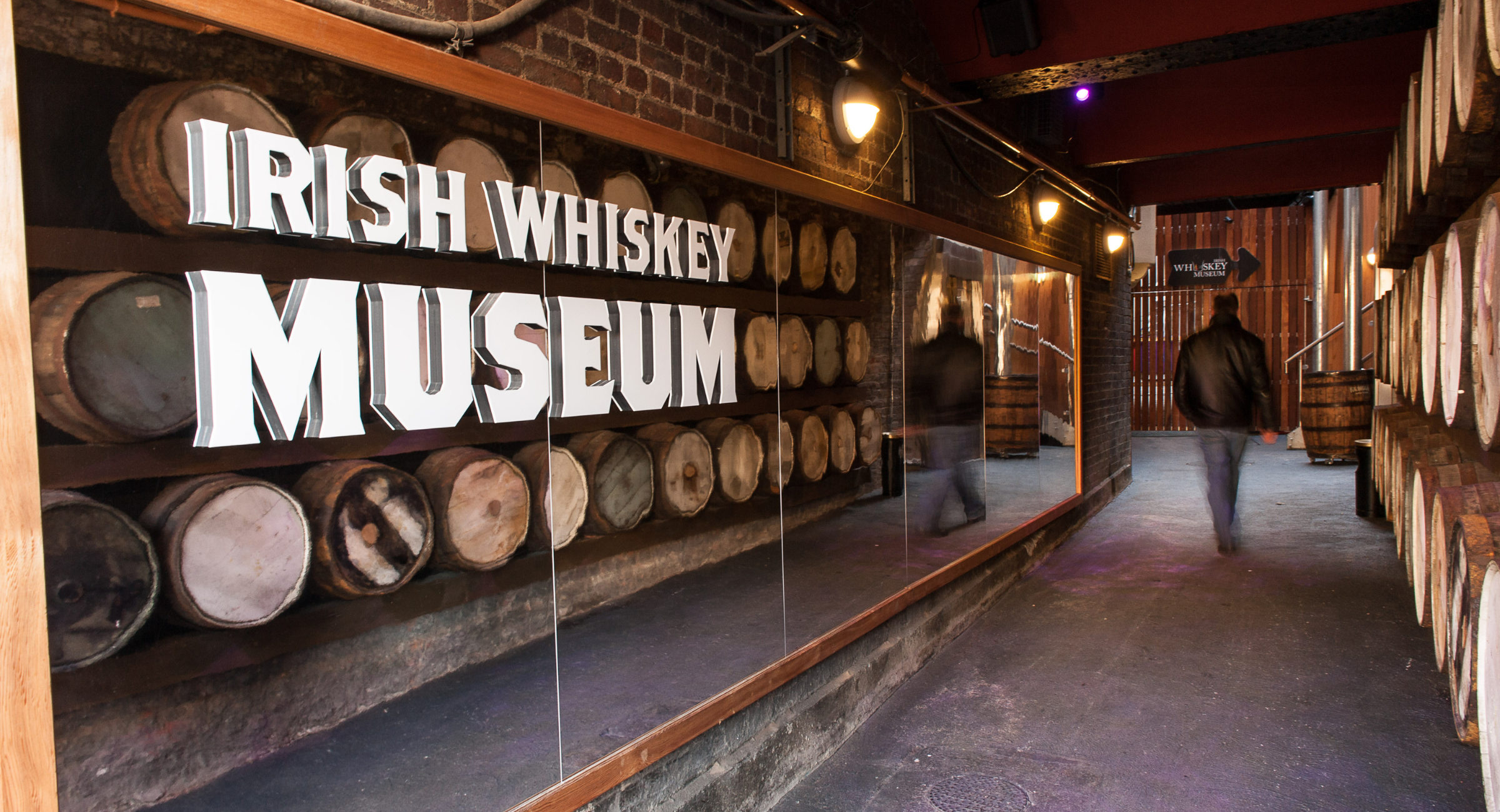
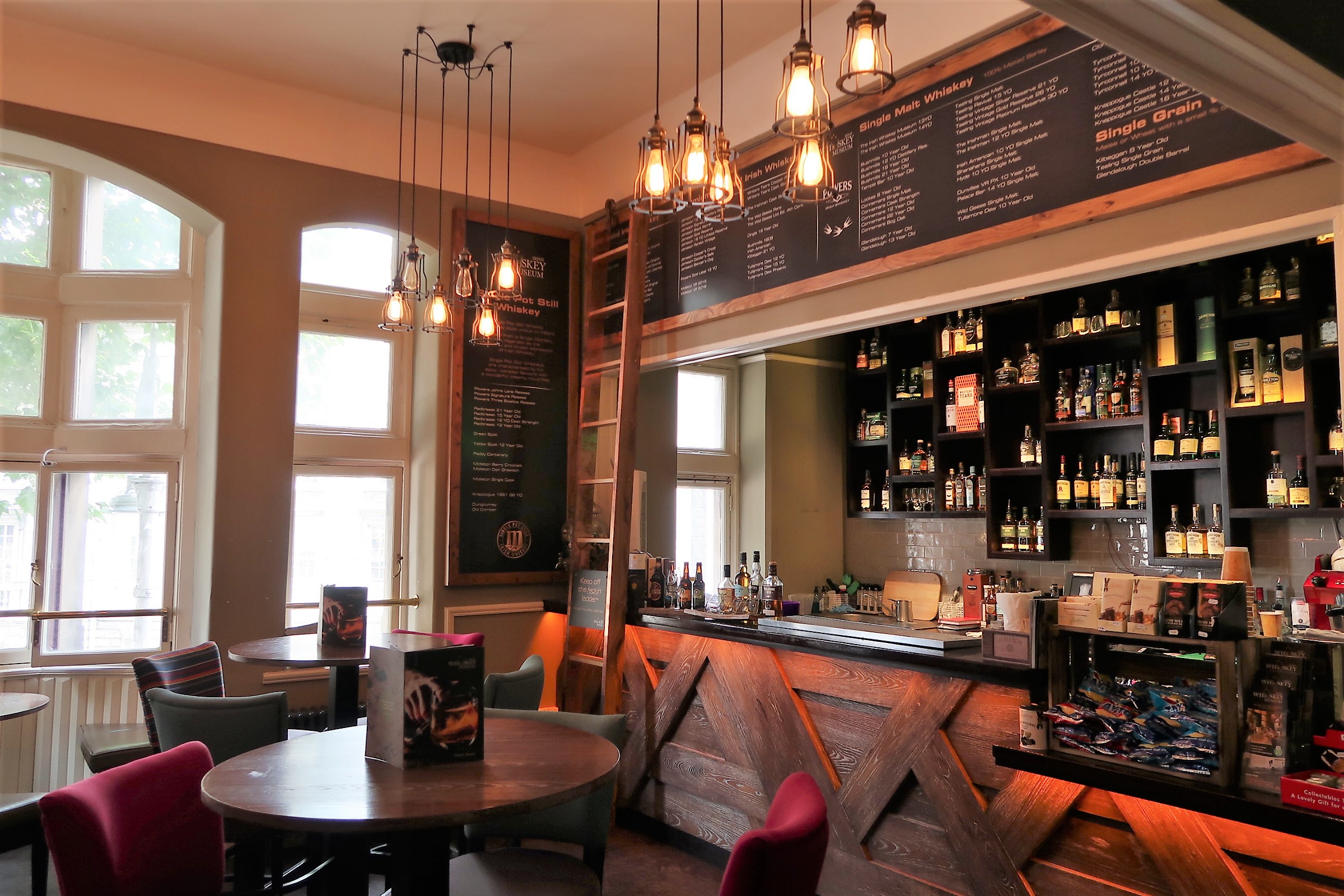
The Irish Whiskey Museum sits in a historic building on Dublin’s Grafton Street, beside Trinity College, and it isn’t quite a pub, a museum or a bar. It’s all three. Four rooms each represent a different period in Irish history, wrapped around an extensive whiskey bar, a tasting room and a retail space. The Irish Pub Company delivered the design, build and fit-out in 2014 for what was the world’s first whiskey museum of its kind, and it remains a useful lesson in historic pub design.
How Do Pub Interiors Reflect History?
Pub interiors reflect history through the physical decisions a building makes, long before anything is hung on a wall.
Materials do most of the work: timber, stone, brass and leather age visibly, recording use in a way synthetic surfaces never do. Architecture sets the frame, ceiling heights, door widths, window proportions and stair positions all belong to a period, and in Georgian Dublin those proportions are unmistakable. Objects supply specificity: the difference between a room that feels old and a room that is old is usually provenance. Colour, furniture and lighting then position the space in time, because every era lit and sat differently. Finally, spatial arrangement carries the strongest historical signal of all, snugs, partitions, counters and back bars reflect how people were expected to drink and socialise, which is why traditional pub architecture still shapes modern hospitality rooms.
How the Irish Whiskey Museum Turns History Into an Experience
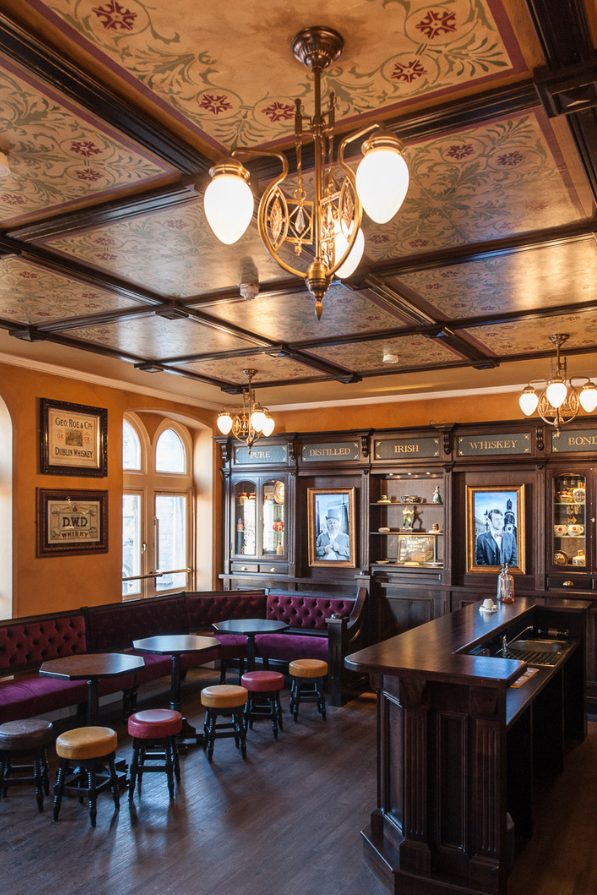
The museum’s concept is a deliberate fusion of old and new. Bric-a-brac sits alongside interactive talking Victorian portraits that narrate the story of Irish whiskey to visitors as they move through the building a history that runs from Ireland’s late-1800s dominance through near-collapse to today’s revival.
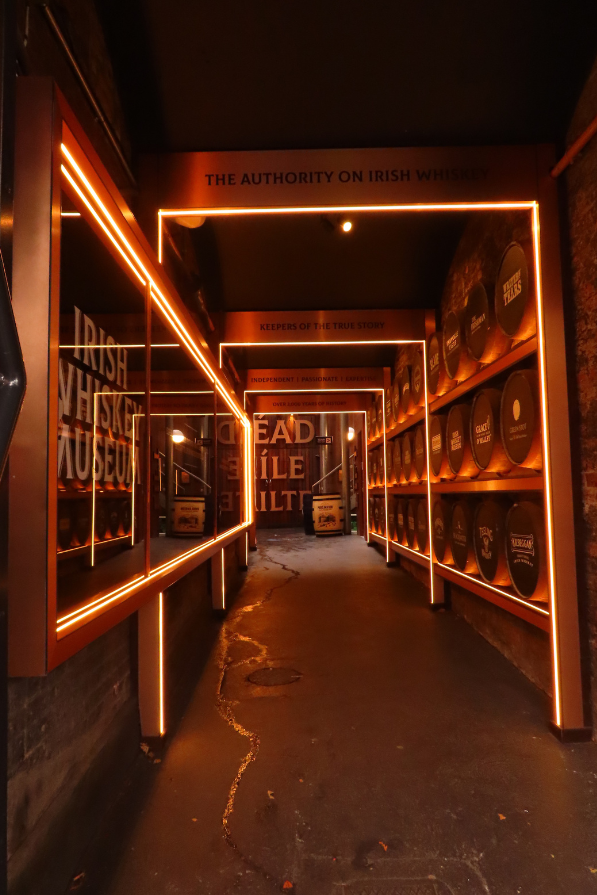
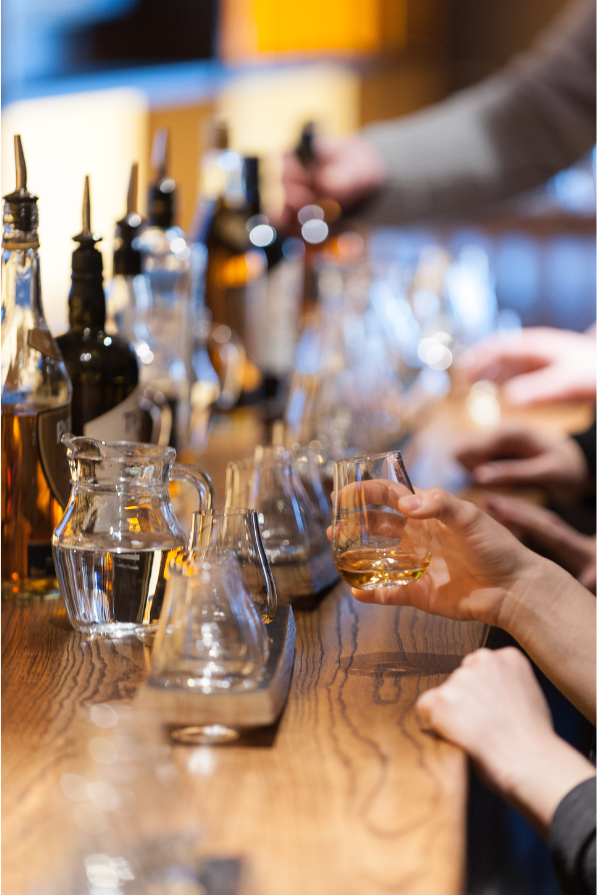
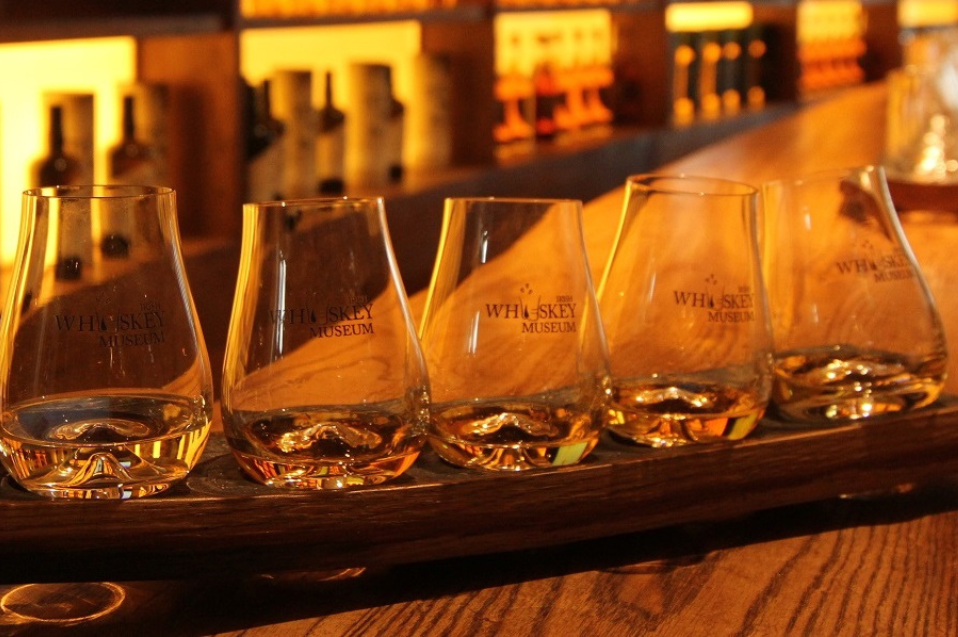
The period sequencing gives the layout its logic. Visitors pass through spaces styled to different eras, ending in the tasting bar, and the design was planned around that journey: tour groups arriving together, guests staying engaged between rooms, somewhere to sit and relax in a genuine bar setting, then tasting and retail, all inside one multi-level building with narrow stairwells and tight rooms to work around.
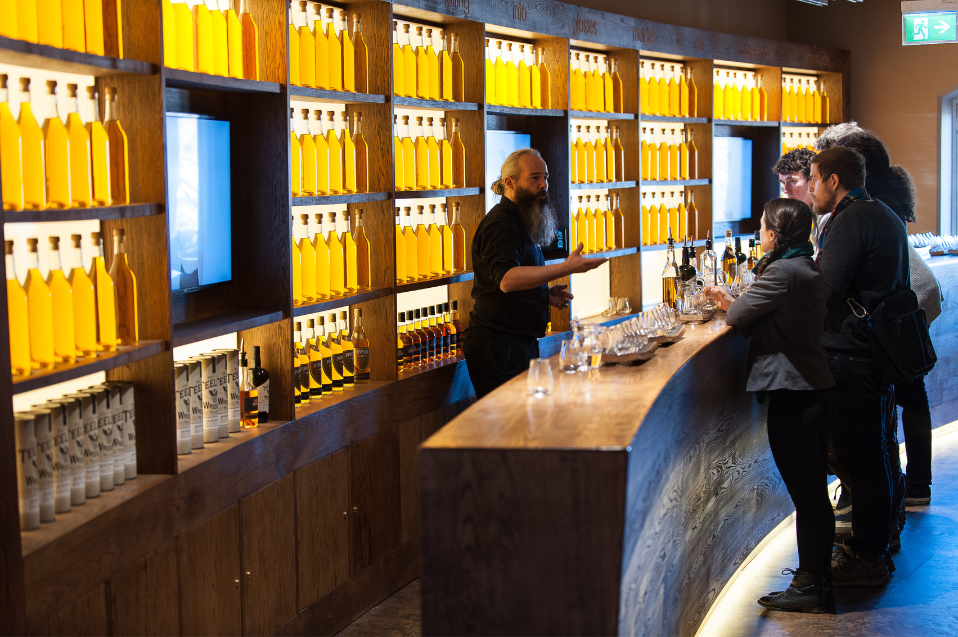
Craft carries the story at close range. Intricate Irish handcrafted joinery runs throughout, and hand-illustrated feature wallpaper depicting scenes of Dublin was created specially to bring the city outside into the interior. Contemporary technology is used carefully rather than decoratively: a custom LED feature wall in the tasting room is recessed behind shelving and kept a warm amber, so it complements the backlit whiskey bottle display instead of competing with the period rooms.
What Makes a Historic Bar Interior Feel Authentic?
Authenticity is a matter of layers, and layers take either time or genuine craft.
Real materials are non-negotiable, because they age correctly, the patina on brass, worn timber and softened leather is the visual evidence of use that guests read subconsciously. Historical references need to be specific to the building and the place, not generically “old”. Imperfection matters: perfectly uniform surfaces read as new, and slight irregularity in joinery, glass and finishes is what makes a room believable. Local identity anchors it, the Dublin scenes illustrated across the museum’s wallpaper could not belong to any other city. The failure mode is artificial theming: props bought by the metre, distressed finishes applied without reason, and decoration that references a period nobody can name. The best historic pub interiors never feel styled, only inherited.
How Can Storytelling Influence Pub and Bar Design?
Storytelling is what turns a collection of good details into a space guests remember.
The sequence runs in one direction. History supplies the raw material, a place, a trade, a family, a period. That history is then made physical through objects with real provenance. Those objects become visual cues that guests read without being told, from artwork and signage to the materials underfoot. The cues are arranged into a spatial experience, so moving through the building means moving through the narrative, exactly what the museum’s four period rooms achieve. And that spatial experience becomes customer memory, which is the only part that shows up in revenue.
This is why Irish interior design travels so well. A room built around a story gives people something to describe to someone else, and a described room is a recommended one.
Conclusion
The Irish Whiskey Museum works because history isn’t the theme, it’s the structure. The period rooms set the sequence, the handcrafted joinery and hand-illustrated Dublin wallpaper carry the detail, and the modern technology stays deliberately subordinate to both. That’s the difference between a historic atmosphere and a historical costume. Any hospitality venue in an old building has the same opportunity: treat the building’s story as the brief, and the atmosphere follows without being manufactured.
Frequently Asked Questions
How do you create a historic atmosphere in a modern bar?
Work with the building rather than against it, because original proportions, ceiling heights, window positions and even awkward stairwells carry more historical information than anything you can install. Choose materials that age correctly, the patina on brass, timber and leather is what guests read as genuine without consciously noticing it. Keep modern elements deliberately subordinate, so technology supports the period rooms instead of competing with them.
How can historical elements be incorporated into pub design?
Use objects with real provenance and give every one of them a reason to be there. Period-correct joinery and layout do more than props ever will, because the position of the counter, the presence of snugs and the route through the building all say something about how the space was originally used. Local references anchor it further, and artwork or detailing specific to the city makes a room impossible to transplant anywhere else.
How can storytelling be used in pub interior design?
Pick a real story first, a place, a trade, a family, a period, and treat it as the brief rather than as decoration to add at the end. Make it physical through objects, artwork and materials that carry genuine meaning, then arrange the space so moving through the building means moving through the narrative. Guests pick up those cues without being told, which is why a well-told room needs very little signage. Done properly, people leave with something to describe to someone else, and a described room is a recommended one.


